
What Is Academic Pressure and Its Impact on Students
October 28, 2026 · Editorial Team · 13 min read
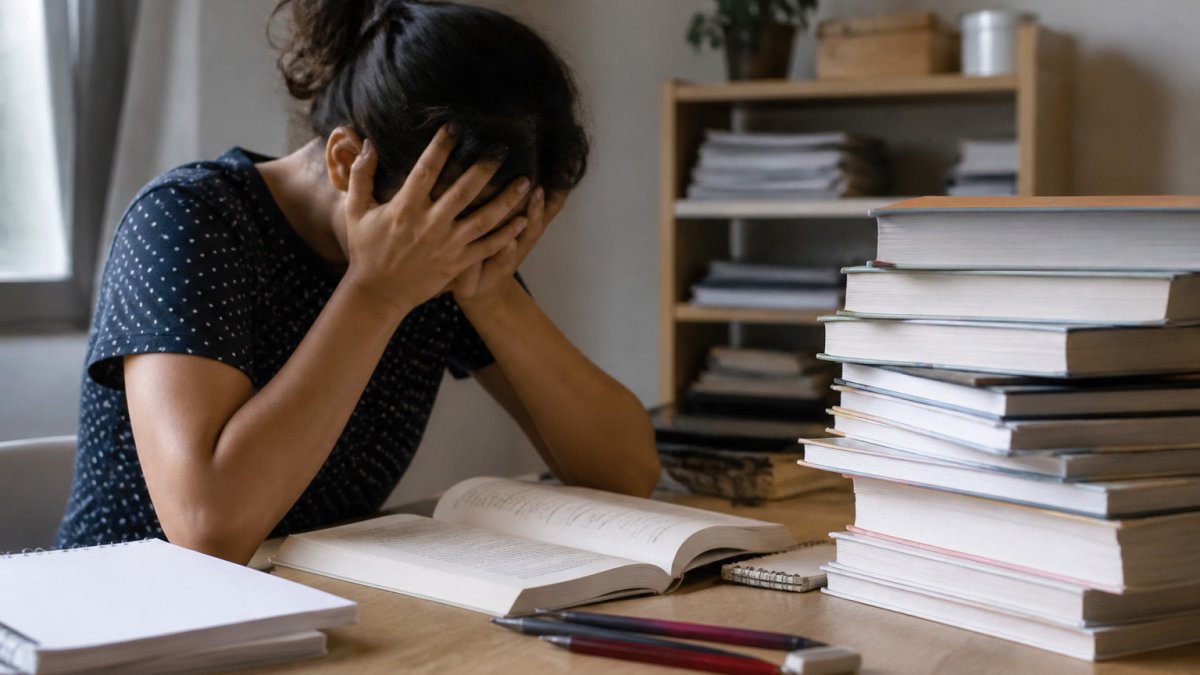
Quick Summary
Academic pressure is the stress students feel when school demands, such as grades, exams, and assignments, exceed the resources they believe they have to meet them. It becomes harmful when demands feel constant, no way to meet them seems available, and recovery time disappears. Over time it can affect sleep, mood, confidence, and physical health.
- Pressure becomes harmful when demands feel constant, a student sees no way to meet them, and recovery time disappears.
- Sustained pressure can lead to anxiety, low mood, sleep problems, and burnout.
- Warning signs include sleep changes, physical complaints, withdrawal, and declining grades.
- Several signs lasting more than a few weeks are a reason to start a conversation or seek help.
- For immediate support, students can call or text 988, the Suicide and Crisis Lifeline.
Table of Contents
- What Is Academic Pressure and Its Impact on Students
- What Academic Pressure Means and How It Differs From Healthy Challenge
- Common Causes and Sources of Academic Pressure
- How Academic Pressure Affects Mental Health
- Signs of Academic Stress to Watch For in Students
- How Impact Differs Across Age, Education Level, and Circumstances
- How to Cope With Academic Pressure Day to Day
- How Parents and Schools Can Provide Support for Student Stress
- Finding Student Mental Health Resources and When to Get Professional Help
- Frequently Asked Questions
What Is Academic Pressure and Its Impact on Students
Last Updated: October 27, 2026
Academic pressure is the stress students feel when school demands, grades, exams, assignments, expectations, exceed what they feel able to handle. It is not always harmful; the difference lies in how long it lasts, how intense it feels, and whether a student has support and recovery time.
Academic pressure touches far more than test scores: it can affect sleep, mood, relationships, and a student's sense of belonging in school.
What Academic Pressure Means and How It Differs From Healthy Challenge
Academic pressure is the perceived gap between what a student is expected to achieve in school and the resources they believe they have to meet those expectations. A challenging class that pushes a student to grow is healthy challenge.
The same workload can energize one student and overwhelm another: healthy challenge brings control, clear goals, and rest, while harmful pressure brings ongoing worry, fear of failure, and a shrinking sense of capability.
Common Causes and Sources of Academic Pressure
Academic pressure rarely has a single source; it usually builds from interacting factors such as a heavy course load, high expectations at home, and a part-time job that leaves little room to study.
Common sources include:
- Heavy workloads and tight deadlines, especially when several major exams or projects fall in the same week
- High-stakes testing that determines admission, scholarships, or placement
- Competitive environments where grading curves or class rankings make peers feel like rivals
Family Expectations and Peer Comparison
Family expectations are often well-intended but become pressure when a student feels approval depends on specific grades or career outcomes. Peer comparison adds another layer, especially online.
A practical step is to separate effort from outcome at home: asking "What did you learn this week?" opens more honest discussion than "What grade did you get?" Students also benefit from being reminded that classmates' visible successes rarely show the full picture of their struggles.
Financial Strain and Tuition Worry
Money worries are among the most intense sources of academic pressure for college students.
Students facing this situation should look into financial aid, payment plans, and emergency funds early, before a deadline arrives. Managing these fiscal responsibilities effectively requires balancing life skills education with traditional academic pursuits to ensure long-term stability beyond the classroom.
How Academic Pressure Affects Mental Health
Sustained academic pressure is linked to a range of mental health concerns, especially when unaddressed for long periods. Effects build gradually, so many students do not recognize them until well established.
Anxiety, Depression, and Persistent Worry
Chronic academic stress can show up as anxiety: constant worry about grades, racing thoughts before exams, physical tension, or panic at deadlines.
Persistent worry is worth taking seriously when it lasts for weeks, interferes with daily life, or leads to thoughts of self-harm. Anyone in crisis can call or text 988, the Suicide and Crisis Lifeline, at any hour (Contact Us).
Sleep Problems, Fatigue, and Burnout
Sleep is often the first casualty of academic pressure. Late-night studying, anxious rumination, and irregular schedules disrupt rest, and poor sleep makes concentration harder in a difficult cycle: insufficient sleep impairs attention and emotional regulation, slower tasks push bedtime later, and the pattern repeats.
Burnout is emotional and physical exhaustion that develops when stress stays high without enough recovery. Students may feel cynical about schoolwork, struggle to start tasks, and feel no effort makes a difference.
Physical Symptoms and Health Effects
Mental health effects rarely stay mental. Students under sustained pressure commonly report headaches, stomachaches, muscle tension, appetite changes, and frequent minor illness, real symptoms that often appear before a student can articulate they are struggling. For parents and teachers, physical complaints clustering around school days are a useful early signal.
Effects on Confidence and Self-Esteem
Repeated experiences of falling short can erode a student's belief in their capability. The mechanism is attribution: when a student blames poor results on fixed shortcomings ("I'm not smart enough") rather than strategy, effort, or circumstances, self-esteem declines even when performance is stable. Helping students reattribute setbacks to specific, changeable factors protects confidence.
What the Research Does and Does Not Tell Us
Much of the research on academic pressure and mental health is correlational: students reporting high pressure also report more anxiety, depression, and sleep problems, but causation is harder to establish.
That caveat does not make the association unimportant. Because pressure and distress travel together, schools and families should treat sustained pressure as a risk factor worth watching and measure how students are doing rather than assuming a demanding program is automatically harmful or fine.
Signs of Academic Stress to Watch For in Students
Academic stress often appears in behavior changes before a student says anything directly. Parents, teachers, and friends are well placed to notice these shifts.

Watch for:
- Changes in sleep, such as trouble falling asleep, waking early, or sleeping much more than usual
- Shifts in appetite or physical complaints like headaches, stomachaches, or frequent illness
- Withdrawal from friends, family, or activities the student used to enjoy
- Declining grades or missed assignments that do not match the student's usual pattern
- Irritability, tearfulness, or emotional outbursts that seem out of proportion to the situation
- Loss of confidence, including frequent self-criticism or statements like "I'm not smart enough"
A single sign does not confirm a problem. Several signs lasting more than a few weeks are a reason to start a conversation.
The article lists several observable warning signs that parents, teachers, and friends can watch for.
| Sign | What it looks like | Action |
|---|---|---|
| Changes in sleep | Trouble falling asleep, waking early, or sleeping much more than usual | Start a conversation |
| Physical complaints | Headaches, stomachaches, or frequent illness | Note patterns around school days |
| Withdrawal | Pulling away from friends, family, or favorite activities | Check in with the student |
| Declining grades | Missed assignments or grades off the student's usual pattern | Talk with the student and teachers |
| Emotional changes | Irritability, tearfulness, or outbursts out of proportion | Offer a calm, private conversation |
| Loss of confidence | Frequent self-criticism or "I'm not smart enough" | Encourage reframing setbacks |
How Impact Differs Across Age, Education Level, and Circumstances
Academic pressure is not one experience with one set of effects. The same demand, a major exam or a competitive admission cycle, lands differently depending on a student's developmental stage, school structure, and resources.
Elementary and Middle School Students
For younger students, pressure usually arrives through adult expectations rather than self-imposed goals, accelerated math placement, gifted-and-talented screening, early standardized testing.
Children read adult anxiety accurately. When a parent checks the grade portal every night or reacts strongly to a single low score, the child learns that school performance is a high-stakes signal about their worth.
High School Students
High school concentrates pressure sources into a short window: AP and honors course loads, the SAT and ACT, class rank, and college admissions timelines.
Effects often appear as sleep debt, test anxiety, and a narrowing of identity around achievement. Students may drop extracurriculars they enjoy because those activities no longer "count" for admissions.
College and University Students
In college, grades still matter, but so do financial aid satisfactory academic progress requirements, registration timing, internship recruiting, and independent living.
College is also where financial strain becomes an academic issue. A hold on an account can block registration, and a failed course can affect scholarship eligibility. Students in this position can contact the financial aid office and the academic advisor.
Graduate and Professional Students
Graduate pressure is organized around milestones rather than daily assignments: qualifying exams, thesis or dissertation defense, publication expectations, and funding renewals. The distinctive mechanism is long feedback cycles, months of work without clear external validation can amplify self-doubt and perfectionism. Isolation is a common risk, especially for students who relocate and lose their support network.
Circumstances That Change the Equation
Beyond grade level, several circumstances reliably increase the load:
- First-generation students may navigate financial aid, registration, and hidden academic norms without family experience to draw on.
- Students working while enrolled trade study and recovery time for income, which can make a normal course load feel overwhelming.
- Students with disabilities may face barriers in accessing accommodations, and the effort of self-advocacy itself becomes a stressor.
A practical takeaway for parents, teachers, and advisors: ask what a student's week actually looks like before recommending a study strategy. "Just manage your time better" is reasonable for one student and impossible for another whose week includes a shift schedule and a caregiving role.
How to Cope With Academic Pressure Day to Day
Coping works best built into routine rather than saved for emergencies. These habits may help students manage pressure:
- Break large tasks into smaller steps with specific deadlines, so progress feels visible
- Protect sleep by setting a consistent bedtime and stopping study sessions at a set hour
- Schedule breaks between study blocks, including time away from screens
How Parents and Schools Can Provide Support for Student Stress
Parents and schools can support students experiencing academic pressure. The goal is not to remove all challenge but to ensure students have support to meet it.
Practical steps for parents include listening without immediately fixing, asking about wellbeing alongside academics, and being clear that a student is valued beyond their grades. For honest, practical help on teen stress and pressure, see EmotionalTeen.com.
If a student is struggling with money as well as stress, connecting them with the school's financial aid office can reduce one of the biggest sources of worry. Students can also discover financial help for college students, including FAFSA, grants, and work-study.
Finding Student Mental Health Resources and When to Get Professional Help
Professional help is appropriate when stress lasts several weeks, affects sleep or eating, or leads to withdrawal from school or daily life. A school counselor, campus health center, or primary care provider may be a first contact.
For immediate support, the 988 Suicide and Crisis Lifeline is available by call or text, and the Crisis Text Line can be reached by texting HOME to 741741. Learn how charitable tuition assistance keeps students enrolled and less stressed about paying for school.
Frequently Asked Questions
What is academic pressure?
Academic pressure is the sense of strain students feel when school demands, grades, or expectations feel greater than they can comfortably handle. It is not the same as a normal challenge that motivates effort. Pressure becomes harmful when it is constant, when the stakes feel impossible to meet, or when it begins to affect sleep, health, mood, or the ability to function. Researchers and school counselors generally distinguish between manageable challenge and pressure that persists without relief.
What causes academic pressure in students?
Academic pressure usually comes from several sources at once. These include high expectations from parents or teachers, competition with peers, heavy workloads, frequent high-stakes exams, fear of failure, perfectionism, and worry about future college admission or careers. For some students, financial strain and worry about paying tuition add to the load. Because these sources interact, a student may feel overwhelmed even when no single factor seems extreme on its own.
How does academic pressure affect mental health?
Persistent academic pressure is linked to anxiety, low mood, and in some cases depression. Students may experience constant worry, panic symptoms before exams, loss of confidence, or emotional detachment from school and friends. Physical effects can include headaches, stomach problems, disrupted sleep, and exhaustion. Evidence on the strength of these links varies by study design and population, so the impact is best understood as a risk factor rather than a guaranteed outcome.
How can students cope with academic pressure?
Practical coping steps include breaking large assignments into smaller tasks, setting a study schedule with rest built in, and protecting sleep. Students can also talk with a teacher, counselor, or friend about their workload and ask for extensions or clarification when needed. Regular physical activity, limiting late-night screen use before bed, and separating schoolwork from recovery time are other options.
When should a student seek professional help for academic stress?
A student should seek professional help when stress lasts for several weeks, interferes with sleep, eating, or daily functioning, or when it includes persistent sadness, panic attacks, or thoughts of self-harm. School counselors are a practical first contact because they know the school environment. If there is any risk of harm, contact a crisis line such as 988 in the United States or emergency services immediately.
